


 English
 Français
 русский
 Español
What gauge size of blood lancet needle is best for painless testing?
Jul 08,2026
The Fundamental Role of Blood Lancet Needles in Diagnostic Accuracy
The blood lancet needle serves as the critical interface between the patient and the diagnostic process, primarily functioning to create a precise, controlled puncture in the skin to obtain a capillary blood sample. The direct conclusion regarding their use is that selecting the correct needle specification and employing proper technique are the two most influential factors in minimizing patient pain while ensuring an adequate blood volume for accurate test results. A suboptimal puncture—whether too shallow or excessively deep—can lead to hemolysis, insufficient sample volume, or the need for repeated lancing, all of which compromise the integrity of the diagnostic data.
At a microscopic level, these devices are engineered to balance sharpness with structural integrity. A high-quality blood lancet needle must penetrate the stratum corneum and epidermis with minimal resistance. This reduction in resistance is directly correlated with the reduction of lateral tissue tearing, which is the primary cause of pain during the puncture. Consequently, the geometry of the needle point and the smoothness of its surface are paramount. In modern medical practice, these devices are not merely sharp sticks; they are sophisticated instruments designed to standardize the depth and force of the incision, thereby removing variability introduced by human hand tremors or hesitation.
Understanding Needle Gauge and Its Impact on Patient Experience
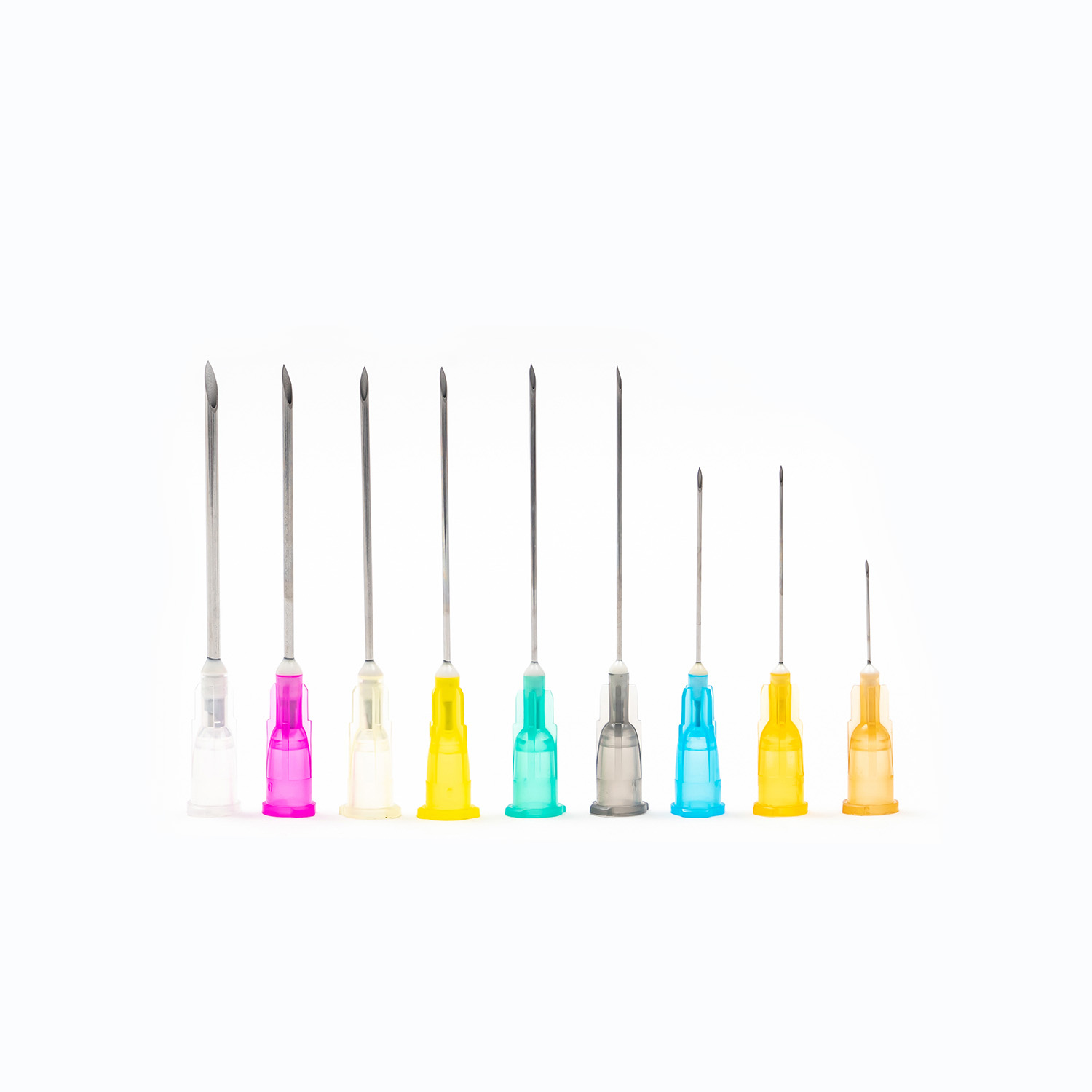
The term "gauge" refers to the diameter of the blood lancet needle, and it is an inverse scale, meaning that a higher gauge number indicates a thinner needle, while a lower number indicates a thicker one. The choice of gauge is a primary determinant of the patient's comfort level. Thinner needles, typically in the range of 30 to 33 gauge, are increasingly preferred for routine glucose monitoring because they create a smaller wound channel, resulting in less stimulation of nerve endings.
However, there is a functional trade-off. While a higher gauge (thinner) needle causes less pain, it may not always provide a sufficient blood flow for patients with thicker skin or poor peripheral circulation, such as those with advanced diabetes or calloused fingertips. In these scenarios, a lower gauge (thicker) needle, such as a 28 or 21 gauge, might be necessary to ensure the blood flows freely without the need to squeeze the fingertip. Squeezing the finger to extract blood is a major cause of inaccurate readings, as it mixes interstitial fluid with the blood sample. Therefore, selecting the appropriate gauge is a clinical decision that balances comfort with physiological necessity.
| Needle Gauge | Diameter (Approximate) | Pain Level | Best Use Case |
|---|---|---|---|
| 21G - 25G | Thicker | Higher | Calloused skin, high-volume tests |
| 28G | Standard | Moderate | General daily testing |
| 30G - 33G | Ultra-Thin | Minimal | Frequent testing, sensitive skin |
The Importance of Sterility and Single-Use Protocol
One of the non-negotiable aspects of using a blood lancet needle is the adherence to a strict single-use policy. These devices are supplied sterilized, typically using gamma irradiation or ethylene oxide gas, to ensure that no pathogens are introduced into the bloodstream. Once used, the needle is immediately contaminated with biological material. Even if the needle is wiped clean, microscopic residue remains within the hollow bore or on the tip, creating a significant risk of infection if reused.
Furthermore, the structural integrity of the needle tip degrades after a single puncture. The microscopic tip is designed to be razor-sharp for one interaction. Upon entry, the tip may microscopically bend or dull. A dull needle requires more force to penetrate the skin, which dramatically increases pain and causes more tissue trauma. This trauma can lead to the formation of scar tissue over time, specifically at the fingertip sites. Scar tissue is denser and less vascular than healthy skin, making future blood sampling even more difficult. Using a fresh, sterile lancet for every test is the most effective method to preserve fingertip health and ensure sterility.
Safety Mechanisms: Preventing Accidental Needlestick Injuries
In both professional healthcare settings and home environments, the safe disposal of the blood lancet needle is a major concern. Accidental needlestick injuries can transmit serious blood-borne pathogens, including Hepatitis B, Hepatitis C, and HIV. To mitigate this risk, modern safety lancets incorporate engineered safety mechanisms that either cover the needle immediately after use or retract the needle permanently back into the housing.
Types of Safety Features
There are primarily two categories of safety mechanisms found in lancet devices:
- Manual Safety: These require the user to actively engage a safety shield after the lancing event. While effective, they rely on user compliance and proper technique.
- Automatic or Passive Safety: These are advanced mechanisms where the needle is automatically retracted or covered by a shield immediately upon firing. This design eliminates the possibility of user error, ensuring the exposed needle is never present after use.
The implementation of these safety features has drastically reduced the incidence of occupational injuries in clinics and hospitals. For home users, these mechanisms provide peace of mind, ensuring that used lancets can be safely stored in a sharps container without the risk of an accidental prick during disposal.
Optimizing Puncture Depth for Different Skin Types
Not all skin is created equal. The thickness of the stratum corneum (the outermost layer of the skin) varies significantly from person to person and even from finger to finger. A blood lancet needle must penetrate deep enough to reach the capillary beds in the dermis, which lie approximately 1.0 to 2.0 millimeters below the skin surface, but not so deep as to hit nerve endings or bone.
To accommodate this variability, lancing devices often feature adjustable depth settings. These settings control how far the needle extends from the device and the velocity of the puncture. For children or elderly patients with thin, fragile skin, a shallow setting is required to prevent excessive bleeding and pain. Conversely, adults with thick or calloused skin may require a deeper penetration setting to access the blood supply. Understanding how to manipulate this depth dial is a crucial component of successful blood sampling. Proper depth adjustment ensures that the "sweet spot" is hit: obtaining enough blood without causing unnecessary trauma.
Site Selection and Rotation Strategies
While the blood lancet needle itself is the tool, the location of the puncture is equally important for long-term management. The fingertips are the most common site due to their high vascularity, but they are also dense with nerve endings. The sides of the fingertips (the lateral aspects) often have fewer nerve endings than the center (the pad) and can provide a less painful testing experience.
Furthermore, a structured site rotation strategy is essential to prevent the development of calluses and sensitivity. Repeatedly using the same spot causes the skin to toughen, requiring deeper punctures over time. Patients are encouraged to use a grid-like pattern, moving from finger to finger and from the left side to the right side, allowing the skin to heal between tests. This practice not only maintains the sensitivity of the skin but also ensures consistent absorption rates for future tests.
Alternative Testing Sites
While the fingertips are the gold standard for accuracy, particularly when blood glucose levels might be changing rapidly (such as after a meal or exercise), some modern lancet devices and testing systems allow for Alternate Site Testing (AST). These sites include the palm, forearm, or upper arm, which have fewer nerve receptors. However, blood flow at these sites is slower, which may lead to a slight lag in readings compared to fingertip samples. Therefore, the choice of site must align with the specific information required by the patient at that moment.
Technological Evolution in Needle Manufacturing
The manufacturing of blood lancet needles has evolved significantly, driven by electrochemical polishing and laser grinding technologies. These advancements allow for needles to be sharpened to a previously unattainable degree. The goal of this engineering is to create a "smooth puncture" where the needle separates the skin fibers rather than cutting them. This distinction is subtle but vital; a clean separation results in faster healing and less residual pain after the test.
Moreover, the consistency of manufacturing has improved. Quality control processes now ensure that every needle in a box performs identically to the last. This reliability allows patients to trust their testing routine, knowing that variations in their results are likely due to physiological changes rather than equipment failure. As technology progresses, we continue to see a trend toward ultra-fine needles that challenge the historical assumption that thicker needles are always required for adequate blood flow, proving that precision engineering can overcome physical limitations.
Address
Dingtao District (Yantai) Industrial Park, Shandong Province, China


Products
Mobile Site
