


 English
 Français
 русский
 Español
How to Choose the Right Dental Needle for Painless Injections?
Jun 08,2026
The dental needle is an indispensable instrument in modern dentistry, serving as the primary bridge between the clinician and patient comfort during procedures. Its fundamental role is the safe and efficient delivery of local anesthetics, ensuring that interventions ranging from simple restorations to complex oral surgeries can be performed without pain. While the design of the dental needle may seem straightforward, its engineering is highly sophisticated, prioritizing patient safety, procedural efficiency, and minimal trauma. The choice of the correct needle gauge, length, and bevel design, combined with strict adherence to safety protocols, directly correlates with successful clinical outcomes and patient trust.
Ultimately, the effective use of dental needles goes beyond mere technical execution; it encompasses a comprehensive understanding of anatomy, material science, and psychological management. By selecting high-quality needles with siliconized coatings for smooth penetration and ultra-sharp bevels to reduce tissue displacement, dental professionals can significantly reduce the discomfort associated with injections. Furthermore, the implementation of rigorous safety standards prevents cross-contamination and needlestick injuries, protecting both the patient and the dental team. Therefore, mastering the nuances of dental needle selection and handling is not just a procedural requirement but a cornerstone of ethical and proficient dental practice.
Anatomy and Engineering of the Dental Needle
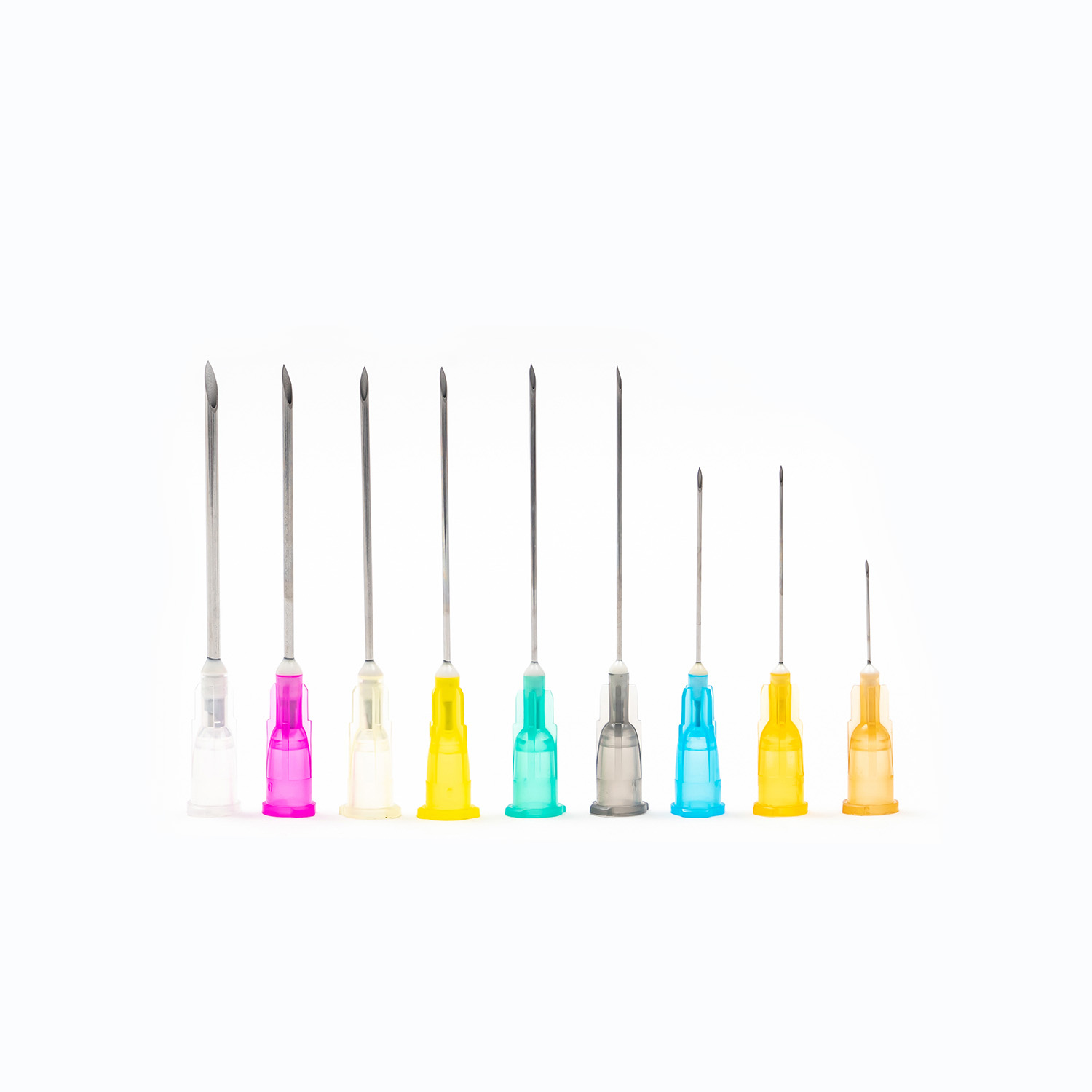
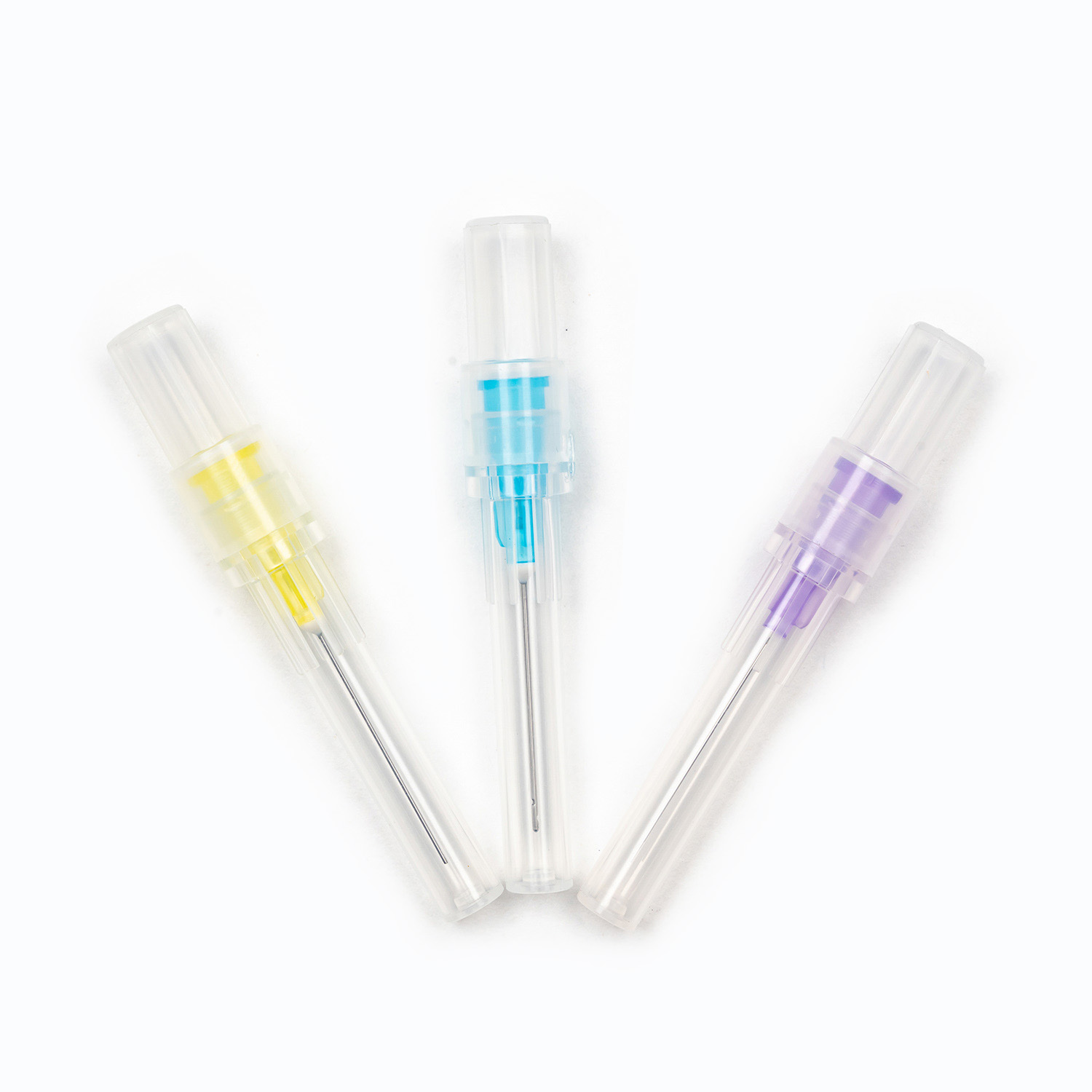
To fully appreciate the function of a dental needle, one must understand its intricate construction. A dental needle is typically composed of three main parts: the hub, the shank, and the cannula. The hub is the plastic portion that attaches to the aspirating syringe, often color-coded to indicate the gauge of the needle for quick identification. This connection must be secure to prevent leakage of anesthetic solution or detachment during the injection. The shank is the metal segment that fits into the hub, providing stability and strength. However, the most critical component is the cannula, the hollow stainless steel tube that penetrates the tissue.
The manufacturing process of the cannula involves precision drawing of stainless steel tubing to achieve the exact diameter required. Most modern dental needles are siliconized, meaning they are coated with a thin layer of silicone lubricant. This coating is crucial as it significantly reduces friction during penetration, allowing the needle to glide through tissue with minimal force. A reduction in required force translates directly to less discomfort for the patient. Additionally, the bevel—the slanted tip of the needle—is engineered to varying degrees of sharpness. A triple-bevel design is common, featuring three cutting edges that create a sharp point, facilitating a clean incision through the mucosa rather than tearing the fibers.
Understanding Gauge: Balancing Flow and Patient Comfort
The term "gauge" refers to the diameter of the needle's lumen. In dentistry, the most commonly used gauges are 25, 27, and occasionally 30. This numerical system can be counterintuitive because a higher number indicates a smaller diameter. Selecting the appropriate gauge is a critical decision that affects both the patient's experience and the efficacy of the anesthesia.
- 25 Gauge: This is a standard choice for many block injections and infiltrations where a larger volume of anesthetic may be required, or where the aspiration technique is needed. Its wider diameter offers higher structural rigidity, reducing the likelihood of deflection if the needle encounters dense tissue.
- 27 Gauge: This is perhaps the most widely used gauge in general dentistry. It strikes an excellent balance between patient comfort and flow rate. It is significantly less traumatic than a 25 gauge, making it ideal for pediatric patients and adults with needle anxiety, while still allowing for adequate aspiration.
- 30 Gauge: Being the thinnest option, this gauge causes the least physical trauma to the tissue. It is often used for periodontal ligament injections or very localized infiltrations where only a small amount of anesthetic is needed. However, clinicians must use caution as the finer bore increases the risk of breakage if excessive lateral force is applied.
Choosing the correct gauge involves evaluating the specific injection site, the viscosity of the anesthetic, and the psychological state of the patient. Studies indicate that patients consistently report less pain with smaller gauges, provided the injection is administered slowly and technique is sound.
Needle Length Selection: Long vs. Short
Dental needles generally come in two lengths: "long" and "short." The long needle is typically approximately 32mm to 40mm in length, while the short needle is about 20mm to 25mm. The selection of length is strictly anatomical and is determined by the target of the injection.
The long needle is essential for block injections, such as the Inferior Alveolar Nerve block. These injections require the needle to traverse significant depths of soft tissue to reach the nerve plexus near the mandibular foramen. Using a short needle for a deep block injection can result in inadequate anesthesia because the anesthetic is deposited too superficially, missing the target nerve. Furthermore, using a short needle for a deep injection forces the clinician to bury the hub into the mucosa, increasing the risk of contamination and bending the needle, potentially causing a fracture.
Conversely, the short needle is designed for superficial infiltrations, such as in the maxillary anterior region. In these cases, the apices of the teeth are close to the surface. Using a long needle for a short injection can be unwieldy, making it difficult to control the angle and stabilize the syringe. A short needle provides better tactile feedback and visibility for superficial procedures. The rule of thumb is that the needle must be long enough to reach the target with the hub still visible, yet short enough to maintain control.
The Critical Role of Aspiration
Aspiration is the process of pulling back on the syringe plunger before injecting the anesthetic to ensure the needle is not located within a blood vessel. Intravascular injection can lead to systemic toxicity, tachycardia, or inadequate anesthesia. Not all dental needles are designed for aspiration; however, standard aspirating needles feature a side port located proximal to the bevel.
The design of this side port is critical. If a needle with a standard bevel opening is used for aspiration, the sharp tip can easily embed itself into the wall of a blood vessel, creating a seal that prevents blood from entering the syringe, resulting in a false negative. The side port of an aspirating needle is designed to face the vessel wall rather than pierce it, significantly increasing the accuracy of the aspiration. Proper aspiration technique is considered a standard of care for block injections in the mandible, where the proximity to major blood vessels is high.
Safety Protocols and Injury Prevention
The dental environment presents unique risks regarding sharps injury. Dental needles are not only sharp but are often used in small, confined oral cavities where visibility and access can be challenging. Adhering to strict safety protocols is paramount to preventing accidental needlestick injuries, which can transmit blood-borne pathogens.
One-Handed Scoop Technique
Recapping a needle is a high-risk activity that should be minimized. If recapping is absolutely necessary, the "one-handed scoop" technique must be employed. This involves using the thumb and forefinger to scoop the cap up from a flat surface and snapping it onto the needle without holding the cap in the other hand. This prevents the hand holding the cap from being accidentally stabbed.
Immediate Disposal
Needles should never be left on trays or countertops. Immediately after use, the needle must be detached from the syringe—using a safety device if available—and disposed of in an approved sharps container. These containers are puncture-resistant and designed to prevent overfilling. Disposing of needles immediately after use eliminates the risk of injury during cleanup or instrument reprocessing.
Comparison of Dental Needle Specifications
To assist in clinical decision-making, the table below summarizes the primary specifications and typical applications of different dental needle types.
| Gauge (Diameter) | Color Code (Hub) | Tissue Trauma | Flow Rate | Primary Usage |
|---|---|---|---|---|
| 25 Gauge | Red | Moderate | High | Block injections, dense tissue |
| 27 Gauge | Green | Low | Medium | General infiltrations, standard use |
| 30 Gauge | Orange/Yellow | Very Low | Low | PDL injections, pediatric patients |
Minimizing Patient Discomfort
Patient anxiety regarding dental injections is a widespread phenomenon. The physical sensation of the needle puncture is only one component of this pain; psychological anticipation plays a massive role. However, the physical properties of the needle and the technique used can mitigate the pain response significantly.
The use of a topical anesthetic prior to needle insertion is standard practice. Applying a gel or liquid anesthetic to the injection site for a minute or two can numb the surface epithelium, dulling the initial prick. Furthermore, the injection speed is critical. The anesthetic solution should be deposited slowly. Rapid injection forces fluid into the tissue under high pressure, causing distension and pain. A slow, steady rate allows the tissue to accommodate the fluid.
Another technique is "needle deflection." By rotating the needle during insertion or using a beveled orientation parallel to the tissue fibers, the clinician can act like a wedge, separating the fibers rather than cutting them. This reduces the cutting force required and lessens post-injection soreness. Warmth of the anesthetic solution is also a factor; an anesthetic stored at room temperature causes less tissue shock than cold solution straight from the refrigerator. By integrating these behavioral and technical strategies, the clinician can transform the injection from a frightening ordeal into a manageable procedure.
Address
Dingtao District (Yantai) Industrial Park, Shandong Province, China


Products
Mobile Site
