


 English
 Français
 русский
 Español
Latex Catheter vs Silicone Catheter: Which Is Right for Your Patients?
Mar 15,2026
The choice between latex and silicone urinary catheters is one that procurement teams and clinical staff encounter regularly — and it's not as straightforward as simply picking the cheaper option or the newer technology. Both materials have been in clinical use for decades. Both work. The difference lies in which patients tolerate each material well, how long the catheter will be in place, and what the risk profile is for the specific care setting.
How the Two Materials Differ at a Clinical Level
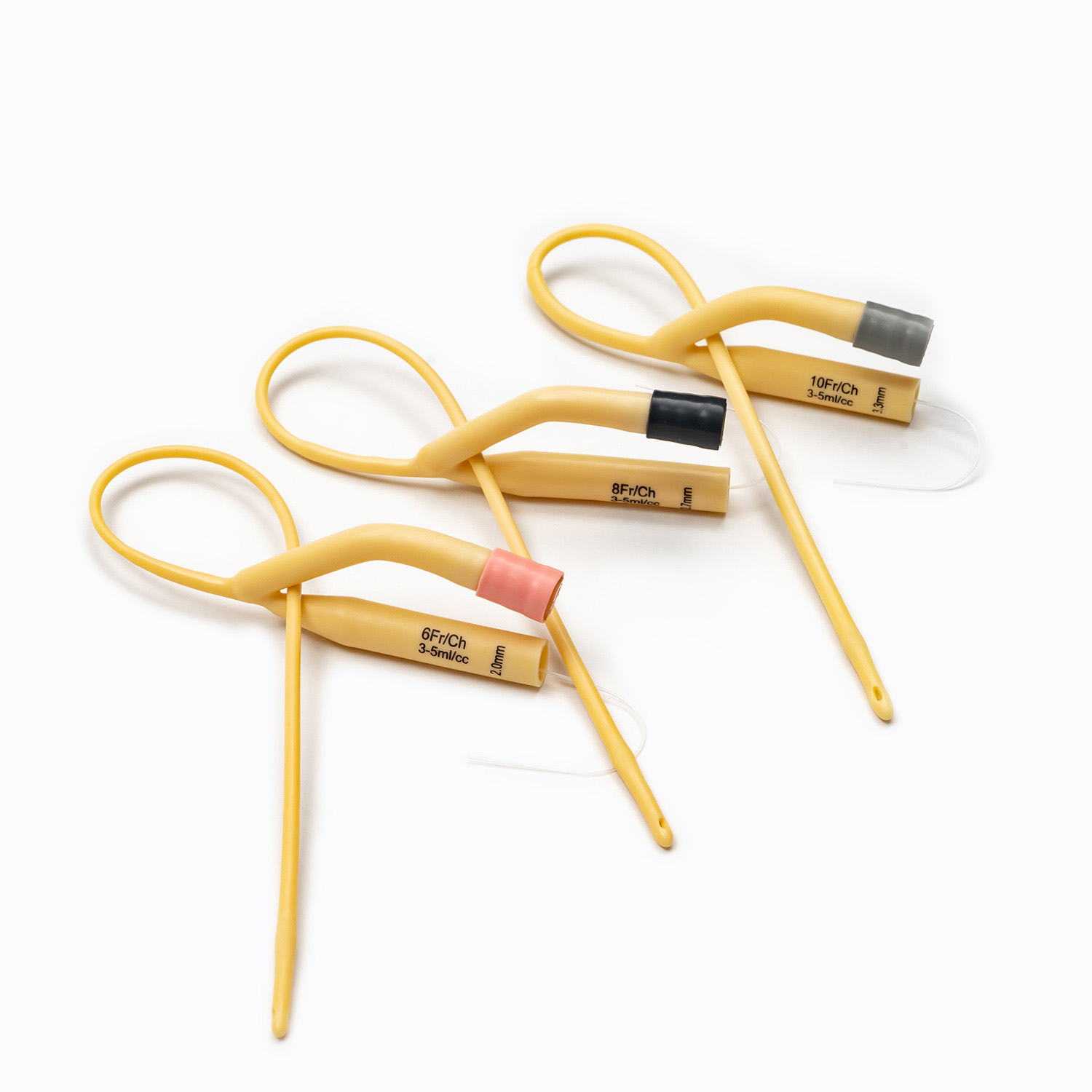
Latex urinary catheters are made from natural rubber latex, typically with a smooth external surface coating to reduce friction during insertion. Latex is a flexible, conformable material that gives the catheter a soft feel and allows it to adapt to variations in urethral anatomy. The material's natural properties provide good drainage flow rates and reliable balloon inflation. Latex catheters remain the most widely used catheter type globally, particularly in short-term and acute-care settings, because they are cost-effective, perform reliably, and are familiar to clinical staff.
Silicone catheters are made from medical-grade silicone elastomer, either as pure silicone throughout (100% silicone) or as a silicone-coated latex core (silicone-elastomer coated). The distinction matters: a pure silicone catheter contains no latex components and is appropriate for latex-sensitive patients; a silicone-coated latex catheter reduces but does not eliminate latex exposure. When latex allergy is a documented concern, only a 100% silicone catheter provides complete protection.
Silicone's primary clinical advantage over latex is its biocompatibility. Silicone does not leach plasticizers, does not trigger the inflammatory tissue response that latex can cause, and accumulates significantly less encrustation — the mineral deposits from urine that can partially block the catheter lumen and necessitate earlier replacement in long-term users. This encrustation resistance is the reason silicone catheters are the standard of care for long-term catheterization, typically defined as catheterization intended to last beyond 4 weeks.
Latex Allergy: When It's Not Optional
Latex allergy affects an estimated 1–6% of the general population and a significantly higher proportion of certain patient groups: healthcare workers with frequent latex exposure, patients with spina bifida (reported rates as high as 50–72% in some studies due to repeated surgical and catheter exposure from early childhood), and patients who have undergone multiple surgeries. The consequences of inserting a latex catheter into a sensitized patient range from localized urogenital reaction to systemic anaphylaxis.
In most hospital settings today, latex allergy is screened during admission. Any patient with documented latex sensitivity or who belongs to a high-risk group should receive a 100% silicone catheter regardless of intended duration. For procurement teams stocking ward supplies, this means maintaining silicone catheter inventory as a standing requirement, not just an occasional special order.
For patients with no known latex sensitivity, the allergy question doesn't directly determine catheter choice — but it makes silicone the safe default for any situation where the patient's allergy history is not fully established, such as emergency admissions where a complete history isn't immediately available.
Duration of Catheterization: The Most Reliable Decision Factor
When latex sensitivity is not a factor, the intended duration of catheterization is the most useful guide for material selection:
Short-term catheterization (up to 7–14 days): Latex catheters are clinically appropriate. The biocompatibility concerns that make silicone preferable for long-term use are not significant over short durations. Latex's lower cost and wide availability make it the practical default for short-term indwelling catheters in acute care settings.
Medium-term catheterization (2–4 weeks): Clinical opinion varies here, but the risk of encrustation-related complications increases with duration. For patients known to be heavy encrusters (those who have required frequent catheter changes due to blockage in previous catheterizations), silicone or hydrogel-coated catheters are preferable from 2 weeks onward. For others, latex remains usable for about 4 weeks.
Long-term catheterization (beyond 4 weeks): Silicone is the standard of care. The encrustation advantage of silicone over latex becomes clinically significant at this duration — silicone catheters can safely remain in place for up to 12 weeks in many protocols, versus 4–6 weeks for latex. This extended change interval reduces nursing workload, patient discomfort from catheter changes, and the infection risk associated with each catheterization procedure. For patients managing long-term catheterization as part of chronic care — spinal cord injury patients, end-stage neurogenic bladder, palliative care — silicone's extended dwell time is a meaningful quality-of-life consideration.
Key Differences for Procurement
| Latex Urinary Catheter | 100% Silicone Urinary Catheter | |
|---|---|---|
| Material | Natural rubber latex with surface coating | Medical-grade silicone elastomer throughout |
| Latex allergy risk | Contraindicated in latex-sensitive patients | Safe for latex-allergic patients |
| Encrustation resistance | Moderate — encrustation accumulates over weeks | High — significantly lower encrustation rate |
| Recommended maximum dwell time | 4–6 weeks | Up to 12 weeks in many protocols |
| Biocompatibility | Good for short-term; tissue reaction risk increases with duration | Excellent — biologically inert, minimal tissue reaction |
| Flexibility | High — soft, conformable to urethral anatomy | Slightly stiffer — may require a more careful insertion technique in some patients |
| Balloon reliability | Reliable — natural latex provides consistent balloon expansion | Reliable — silicone balloon maintains shape well; lower deflation risk on removal |
| Drainage lumen size | Relatively smaller for a given external diameter — the latex wall takes more space | Larger lumen for given external diameter — silicone wall is thinner |
| Unit cost | Lower | Higher — typically 3–5× the cost of equivalent latex |
| Best clinical indication | Short-term inpatient catheterization in non-latex-allergic patients | Long-term catheterization; latex allergy; community/chronic care patients |
The Balloon: A Practical Detail That Matters
Urinary catheters are retained in the bladder by an inflatable balloon at the catheter tip, filled with sterile water after insertion. Balloon specification varies — the standard 5–10mL balloon is used for most adult patients; the 30mL balloon is used in specific urological procedures such as post-prostatectomy hemostasis, where a larger balloon is required to apply pressure to the bladder neck.
Silicone balloons have a mechanical advantage over latex in long-term use: silicone is less prone to crystalline deposit formation on the balloon surface, and the balloon retains its elasticity better over extended dwell periods. A latex balloon that has been inflated for several weeks can become adhered to the bladder wall by encrusted deposits, making removal difficult and uncomfortable. Silicone balloons are less likely to develop this problem, which is one of the practical benefits of silicone beyond the lumen encrustation advantage.
Regardless of catheter material, balloon inflation should always use sterile water — not saline, which can crystallize and block the inflation channel, and not air, which compresses under bladder pressure and allows the balloon to deflate. This is a basic clinical practice point but worth reinforcing in product documentation and training materials.
Sizing: The Charrière (Fr) Scale
Catheter sizing uses the Charrière (Ch) or French (Fr) gauge, where 1 Ch = 0.33mm external diameter. Most adult male catheterization uses Fr 14–18; adult female catheterization typically uses Fr 12–14. Smaller sizes cause less trauma and are preferred when drainage is adequate; larger sizes are used when thick secretions or clots require a larger lumen for adequate drainage.
The same French size in latex versus silicone gives a different internal lumen diameter because silicone's thinner wall leaves more of the cross-section available for the drainage lumen. A Fr 16 silicone catheter has a larger drainage lumen than a Fr 16 latex catheter. For patients with known drainage issues — heavy sediment, clots — silicone's larger effective lumen at the same external diameter is a clinical advantage beyond the encrustation and biocompatibility benefits.
Frequently Asked Questions
Can a latex catheter be used if the patient has never had a latex reaction?
No prior reaction does not rule out latex sensitivity — sensitization can develop with repeated exposure over time, and a patient's first significant reaction may be the current catheterization. For patients with established latex allergy documentation, silicone is non-negotiable. For patients with no documented history and no risk factors (no spina bifida, no history of multiple surgeries), latex is clinically appropriate for short-term use, but any history of atopic conditions (eczema, asthma, hay fever) raises the baseline allergy risk and warrants consideration of silicone.
How should hospitals manage catheter change intervals for long-term patients?
Long-term catheter management protocols vary by institution, but a general framework is: silicone catheters changed every 8–12 weeks in stable patients with no catheter-associated problems; earlier change if the patient reports discomfort, bypassing occurs, or encrustation causes reduced flow. Some patients are "heavy encrusters" who require shorter change intervals regardless of catheter material due to individual urinary chemistry — these patients benefit most from silicone and may additionally benefit from urinary acidification or increased fluid intake to reduce encrustation rate. Catheter-associated urinary tract infection (CAUTI) prevention protocols also influence change intervals and catheter management practices.
What certifications should a latex catheter supplier provide?
For international procurement, the key certifications are CE marking under EU MDR (Medical Device Regulation 2017/745) for European markets, and ISO 13485 quality management system certification for general quality assurance. ISO 10555 (intravascular catheters, relevant testing standards) and ISO 8669-2 (urinary catheters) define the performance and safety testing requirements. For the US market access, FDA 510(k) clearance or registration is required. Ethylene oxide sterilization (the standard method for urinary catheters) should be confirmed as meeting the ISO 11135 standard. Request full technical documentation, including materials declarations, sterility testing records, and shelf life validation studies, for due diligence on new suppliers.
Latex Catheter | Infusion Sets | Syringes | Infusion Accessories | Contact Us
Address
Dingtao District (Yantai) Industrial Park, Shandong Province, China


Products
Mobile Site
